ASUS ZenBook 13 OLED UM325 review
ASUS ZenBook 13 OLED UM325 — from 2021, 1.14 kg, performance 50.
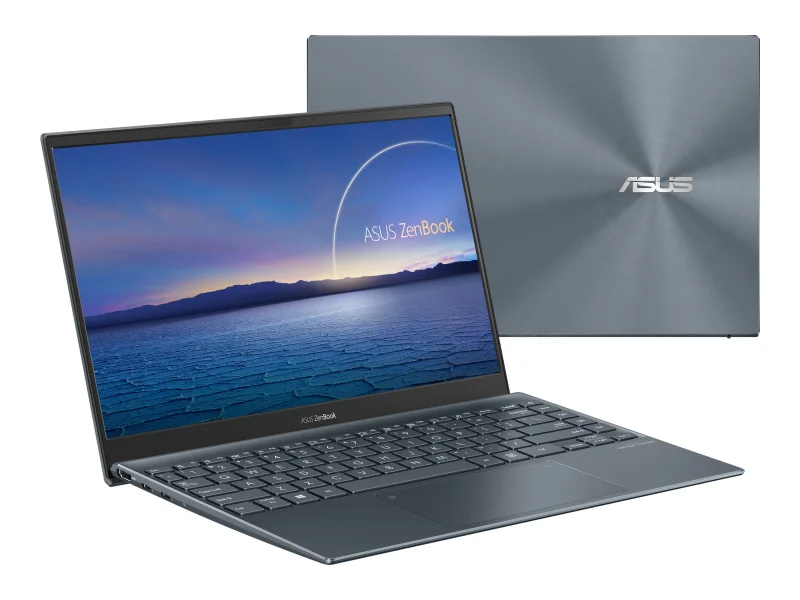
Technical specifications
| Type | Ultrabook |
| Release year | 2021 |
| Screen | 13.3" · 1920x1080 |
| Processor | AMD Ryzen 5 5500U , AMD Ryzen 5 5600U , AMD Ryzen 7 5700U , AMD Ryzen 7 5800U |
| Graphics | Radeon RX Vega 7 |
| Max. RAM | 16 GB |
| Weight | 1.14 kg |
| Battery | 67 Wh |
Performance scores
Vega 7 on the premium shelf: a 1041 percent graphics placing
The ZenBook 13 OLED (UM325) of 2021 carries a Ryzen 5 5500U with Vega 7 graphics and 16 GB of RAM at $739, and its standout reading is the placement: graphics at 43.85 against an ultrabook-class median of 3.84 — 1041.9 percent above, mainstream tier, top quartile. Mobility at 96 adds a second top-quartile reading against a median of 64. The flagged weakness is the 16 GB memory ceiling, half the class median, in the budget segment for the class.
The graphics anomaly, explained honestly
A ten-times-median graphics placing on the premium shelf is real but needs its context: the ultrabook class median of 3.84 is set by machines with unscored or minimal integrated graphics, so a genuinely measured mainstream iGPU towers over the column. The receipts give the placing substance — Overwatch, GTA V, and Rainbow Six Siege clear recommended, with Photoshop and Visual Studio Code clearing minimum. Esports-tier gaming on an OLED ultrabook is not a claim here; it is a verified entry.
Carry class, memory budget
Mobility at 96 places this among the most carry-friendly machines in the class — the 1.3-kilogram school of ultrabook — and pairs naturally with the gaming envelope: this is a machine that travels and plays. The 16 GB ceiling is the honest boundary, flagged at half the class median; the gaming receipts fit inside it today, but the memory, not the graphics, is where this configuration will age first.
Premium-shelf decay
The measured rate is 9.44 percent per year with no unit anchor — among the gentler slopes in this batch. Two years retain roughly five-sixths of the $739. OLED ultrabooks with verified receipts hold their band well.
Positioning on the shelf
No analog peers are returned. The batch's nearest kin is the VivoBook 15 M513 at $399 — the same 5500U-and-Vega-7 platform on the general shelf for $340 less, with a plastic body and no OLED. This seat is the premium-body version of that silicon.
Bottom line
For a buyer who wants the rec-bar gaming receipts of the Vega 7 platform wrapped in a top-mobility OLED body, this is that machine, and the twin data points — graphics 43.85, mobility 96 — carry the case. The 16 GB ceiling is the disclosed limit. Judge the ten-times placing against its class context, and the purchase still lands clearly ahead.
🧭 Your context
Stage: Refining requirements
You're refining — compare finalists head-to-head.
🎯 For your profile
You've viewed: You've recently viewed 50 models — compare this model with them in the analogs matrix.
⭐ What stands out
-
graphics performance is higher than typical ultrabook class (+200%) (mainstream tier).
top 25% of its category -
memory capacity is lower than typical ultrabook class (+50%) (comfort).
budget segment of category -
mobility is higher than typical ultrabook class (+50%) (high tier).
top 25% of its category
🎮 What it can run
⚙️ Configuration analysis
Top configuration suits everyday productivity, light photo editing, and esports titles.
🤔 How to choose
Universal advice for any use case.
- Reliability vs price: reliability (median 51) ↔ price (median 373.2).
- Weight vs CPU: mobility (median 64) ↔ overall performance (median 41.7).
- Upgradeability vs battery: upgradability (median 50) ↔ battery life (median 4.4).
ZenBook 13 OLED UM325: verdict
➡️ Next step
You're refining — compare finalists head-to-head.