ASUS ZenBook 14 UX435 review
ASUS ZenBook 14 UX435 — from 2021, 1.19 kg, performance 50.
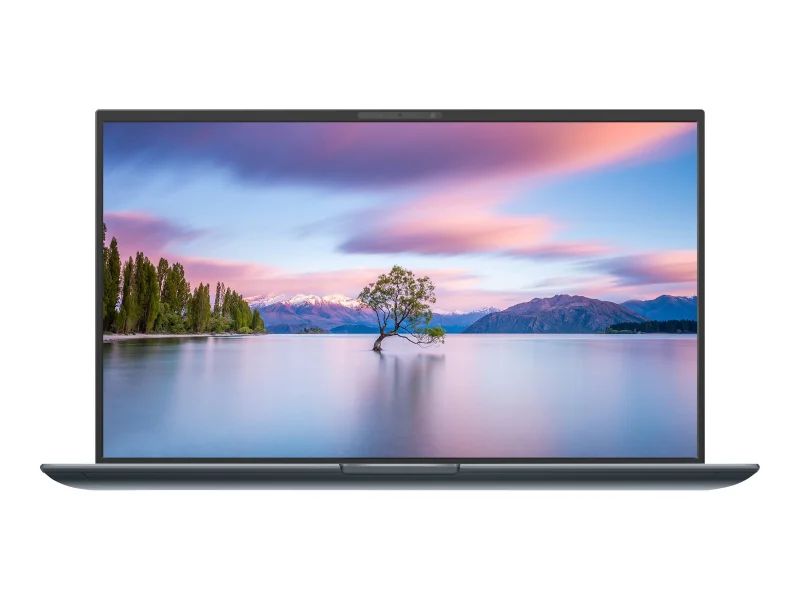
Technical specifications
| Type | Ultrabook |
| Release year | 2021 |
| Screen | 14" · 1920x1080 |
| Processor | Intel Core i5 1135G7 , Intel Core i7 1165G7 |
| Graphics | GeForce MX450 2GB |
| Max. RAM | 16 GB |
| Weight | 1.19 kg |
| Battery | 63 Wh |
Performance scores
The Intel MX450 twin, with the Far Cry receipt
The ZenBook 14 (UX435) of 2021 asks the same $739 as its AMD sibling UM425 in this same batch, with the same MX450 card and the same 16 GB of RAM — the Intel half of the twin experiment: a Core i5-1135G7 in place of the 5500U. Its placements: graphics at 44.73 against an ultrabook-class median of 3.84, 1064.8 percent above, mainstream tier, top quartile, and a performance index at 50.01, 19.9 percent above median in the mid band. The flagged weakness is the same 16 GB ceiling at half the class norm.
The receipt that separates the twins
The sheet is green where the sibling's is green — Overwatch and GTA V at recommended, the latter with a measured 140 fps entry, Photoshop and Visual Studio Code at minimum — and it adds one entry the sibling lacks: Far Cry 5 clearing recommended at a measured 34 fps. On identical tickets, identical cards, and near-identical placements, the measured Far Cry entry is the printed difference: this Intel seat carries the fuller gaming receipt set of the pair.
The same honest ledger
The 16 GB flag, the five years of age, the mid-band platform behind a mainstream card: the twin's costs are this machine's costs, itemized identically. The 1135G7 platform reads a step behind the sibling's aggregate-67 — the performance index here is mid-band, not top-quartile — which makes the trade legible: stronger measured gaming receipts against the softer blended platform score. The buyer picks which printed number matters.
Flat decay
The measured rate is 9.44 percent per year with no unit anchor. Two years retain roughly five-sixths of the $739 — the same gentle band as the twin, for the same reasons.
Positioning on the shelf
No analog peers are returned. The $739 premium row's three-way choice resolves to this: the ZenBook 13 for the carry-and-iGPU story, the UM425 for the aggregate score, this UX435 for the measured gaming receipts. One ticket, three verified answers, no wrong choices among them.
Bottom line
For a buyer who wants the fullest measured gaming set on the MX450 tier — GTA V and Far Cry 5 both at recommended with frame entries — this twin is the seat, and its article prints exactly what the extra receipt costs elsewhere: a mid-band platform score. The 16 GB ceiling is the shared standing flag. Honest twins, honestly differentiated.
🧭 Your context
Stage: Refining requirements
You're refining — compare finalists head-to-head.
🎯 For your profile
You've viewed: You've recently viewed 15 models — compare this model with them in the analogs matrix.
⭐ What stands out
-
graphics performance is higher than typical ultrabook class (+200%) (mainstream tier).
top 25% of its category -
memory capacity is lower than typical ultrabook class (+50%) (comfort).
budget segment of category -
overall performance is higher than typical ultrabook class (+19.9%) (mid).
above class average
🎮 What it can run
⚙️ Configuration analysis
Top configuration suits everyday productivity, light photo editing, and esports titles.
🤔 How to choose
Universal advice for any use case.
- Reliability vs price: reliability (median 51) ↔ price (median 373.2).
- Weight vs CPU: mobility (median 64) ↔ overall performance (median 41.7).
- Upgradeability vs battery: upgradability (median 50) ↔ battery life (median 4.4).
ZenBook 14 UX435: verdict
➡️ Next step
You're refining — compare finalists head-to-head.